Introduction
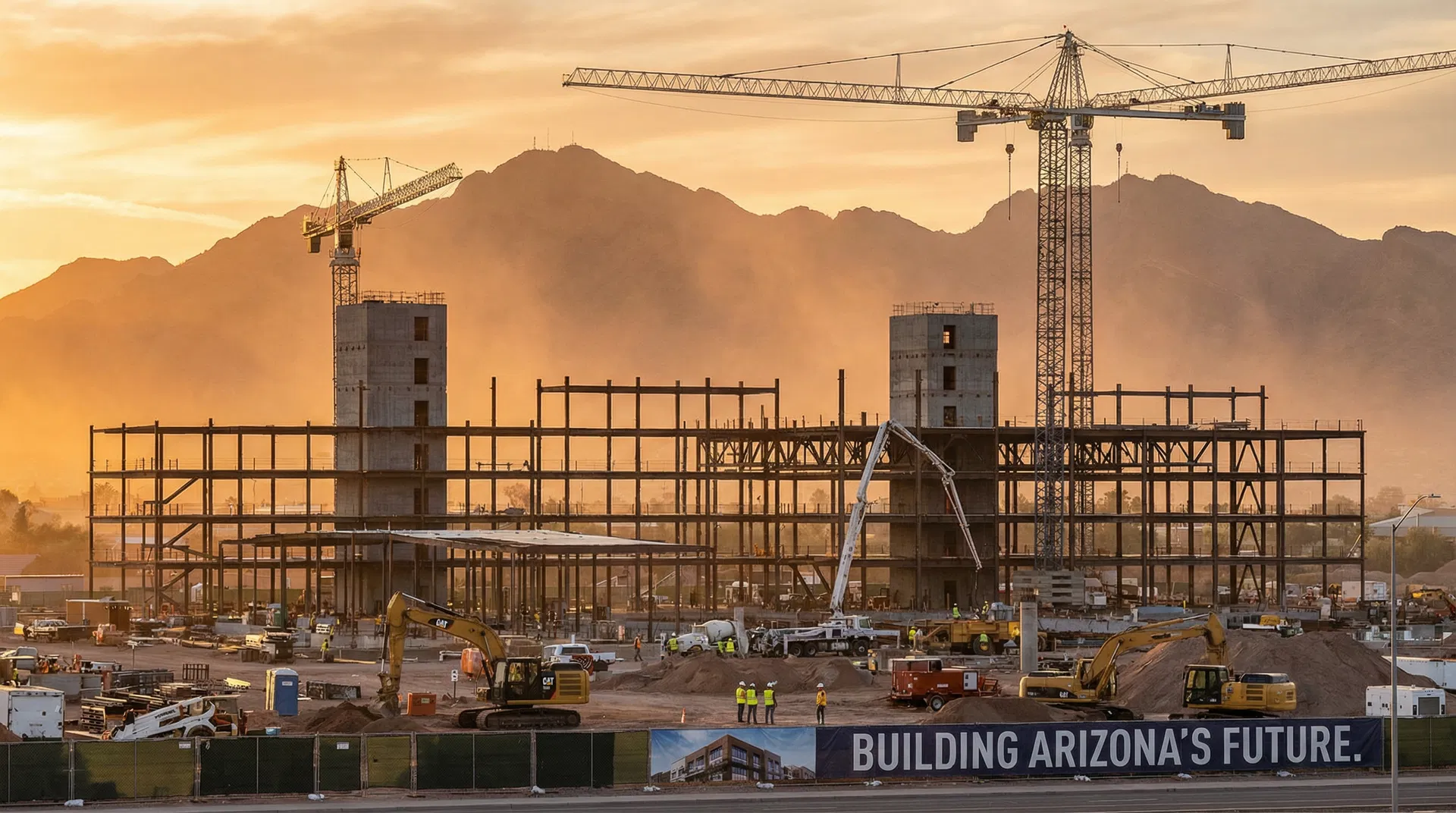
Arizona's construction industry is experiencing unprecedented growth, with the sector expanding from $5 billion to $25 billion in recent years and showing no signs of slowing in 2026. Phoenix, as the state's economic engine and one of America's fastest-growing metropolitan areas, drives much of this construction boom. The city is undergoing massive development across multiple corridors, with data centers, hospitality projects, semiconductor facilities, and thousands of new housing units reshaping the metro landscape.
The numbers tell a compelling story: By December 2026, Arizona will have more than 195,000 construction jobs to fill, reflecting the industry's explosive growth. The state currently employs approximately 229,000 construction workers across all sectors, with building construction employment in the Phoenix metro averaging 41,500 workers per month in the first nine months of 2025—a 5 percent increase compared to the previous year. Phoenix has built 4,600 affordable apartments in the past five years, tripling pre-pandemic volume, while major developments continue to break ground across the Valley.
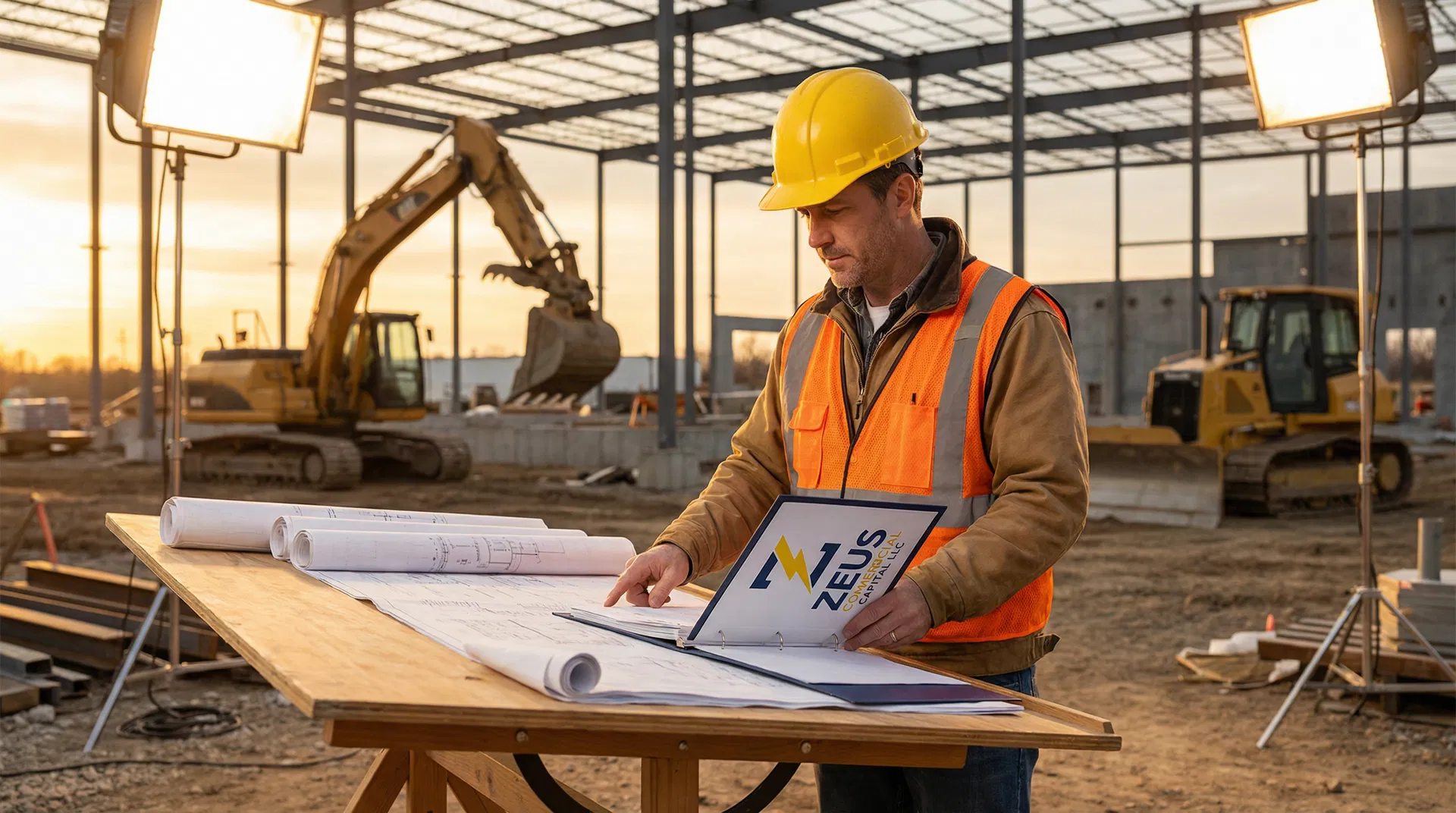
For Arizona contractors, this growth environment creates exceptional opportunities—but also significant capital challenges. Construction businesses face unique financial demands that distinguish them from other industries: large upfront costs for materials and labor before receiving payment, project-based revenue cycles creating cash flow gaps, expensive equipment requirements, bonding and insurance costs, and seasonal fluctuations affecting project availability. Whether you're a residential contractor building homes in Buckeye, a commercial contractor working on Phoenix's booming development projects, or a specialty contractor serving the semiconductor industry, understanding your financing options is crucial for capitalizing on Arizona's construction boom.
This comprehensive guide explores construction financing solutions specifically tailored to Arizona contractors, providing the knowledge and resources needed to secure capital that fuels growth, manages cash flow, and navigates the unique challenges of construction industry operations.
Arizona's Construction Boom in 2026
Market Fundamentals and Growth Drivers
Arizona's construction market enters 2026 with healthy gains expected across multiple sectors. Non-residential and residential construction are both forecast to grow, driven by population influx, corporate relocations, and major infrastructure investments. The Arizona Commerce Authority surpassed every one of its annual goals in 2025, achieving 121 percent of job projections, 162 percent of wage expectations, and nearly double its capital investment targets—metrics that translate directly into construction demand.
Phoenix construction costs saw a 4.76 percent annual change in Q4, reflecting both inflation pressures and strong demand for construction services. While rising costs present challenges, they also indicate a robust market where contractors with adequate capital and efficient operations can thrive. The key is having the working capital and equipment financing needed to take on projects, manage cash flow through payment cycles, and scale operations to meet demand.
Residential Construction: Meeting Housing Demand
Phoenix's rapid population growth creates insistent housing demand. The metropolitan area continues to see significant residential development, from affordable housing projects to luxury subdivisions. Major developments are reshaping Phoenix neighborhoods, delivering much-needed housing across various price points. This sustained demand provides residential contractors with consistent project pipelines—but only if they have the capital to fund materials, labor, and equipment while waiting for payment.
Residential contractors face particular cash flow challenges. They typically must purchase materials and pay subcontractors before receiving draws from construction loans or final payments from buyers. A contractor building a $400,000 home might invest $100,000-$150,000 in materials and labor before receiving the first significant payment. Multiply this across multiple simultaneous projects, and the working capital requirements become substantial. Strategic financing allows residential contractors to maintain multiple active projects without cash flow constraints limiting growth.
Commercial Construction: Corporate Growth and Development
Phoenix's commercial construction sector is booming, driven by corporate relocations, data center development, semiconductor facilities, and retail/hospitality projects. Metro Phoenix's 2026 growth includes massive data centers supporting the technology sector, new hospitality projects capitalizing on tourism growth, mall redevelopments adapting to changing retail patterns, and semiconductor facilities bringing advanced manufacturing to Arizona.
Commercial contractors working on these projects face even larger capital requirements than residential contractors. A commercial project might require $500,000-$2 million in materials, equipment, and labor costs before substantial payments are received. Payment terms on commercial projects often extend 30-90 days after invoice submission, creating significant cash flow gaps. Additionally, commercial projects typically require performance bonds and payment bonds, which themselves require capital and strong financial positioning.
Infrastructure and Specialty Construction
Arizona's infrastructure needs—roads, utilities, water systems, telecommunications—create opportunities for civil contractors and specialty trades. The state's rapid growth necessitates ongoing infrastructure investment to support new developments and maintain existing systems. Specialty contractors serving specific niches (electrical, plumbing, HVAC, concrete, roofing) benefit from demand across both residential and commercial sectors.
These contractors often face unique equipment requirements and certification costs. An electrical contractor might need specialized testing equipment, bucket trucks, and wire pulling machinery representing $200,000-$500,000 in capital investment. A concrete contractor requires mixers, pumps, finishing equipment, and trucks. Equipment financing allows these contractors to acquire necessary tools without depleting working capital needed for daily operations.
Construction Industry Financing Challenges
The Cash Flow Gap Problem
Construction businesses face an inherent cash flow challenge: they must pay for materials and labor before receiving payment from customers. This creates a cash flow gap that can limit growth or even threaten survival if not managed properly. Consider a typical construction project timeline:
- Day 1-30: Purchase materials, begin work, pay labor and subcontractors
- Day 30-60: Continue work, submit first draw request or invoice
- Day 60-90: Receive first payment (if approved promptly)
- Day 90-120: Continue work, submit subsequent invoices
- Day 120-180: Receive final payment (often delayed by punch lists, inspections, or customer disputes)
During this 180-day project, the contractor might invest $200,000 in costs before receiving $250,000 in total payments. While the project is profitable, the contractor needs $200,000 in working capital to bridge the gap between expenditures and receipts. Without adequate capital, contractors must limit the number of simultaneous projects, constraining growth despite strong demand.
Equipment Capital Requirements
Construction equipment represents significant capital investment. A small residential contractor might need $50,000-$100,000 in basic equipment (trucks, tools, small equipment). A mid-sized commercial contractor might require $500,000-$1 million in equipment (excavators, loaders, lifts, specialized tools). Large contractors can have $5-$10 million or more in equipment assets.
Purchasing equipment outright depletes working capital that could fund project operations. Additionally, construction equipment depreciates and requires ongoing maintenance and eventual replacement. Strategic equipment financing allows contractors to acquire necessary equipment while preserving working capital for operations, spreading costs over the equipment's useful life.
Bonding and Insurance Requirements
Many commercial and public construction projects require performance bonds and payment bonds. These bonds guarantee that contractors will complete projects according to specifications and pay subcontractors and suppliers. Bonding companies evaluate contractors' financial strength, credit history, and track record before issuing bonds.
Contractors with limited working capital or weaker financial profiles may struggle to obtain bonding or face higher bonding costs. Improving financial positioning through strategic financing can enhance bonding capacity, opening doors to larger, more profitable projects that require bonds.
Construction Financing Solutions for Arizona Contractors
Working Capital Lines of Credit
Business lines of credit provide construction contractors with revolving access to capital for managing cash flow gaps between project expenditures and customer payments. Lines of credit offer exceptional flexibility for the construction industry's project-based revenue cycles.
How Lines of Credit Serve Contractors
A Phoenix general contractor with a $200,000 line of credit can draw funds to purchase materials and pay subcontractors for multiple simultaneous projects. As customers make progress payments or final payments, the contractor repays the line of credit. The credit line remains available for the next project, creating a revolving capital source that supports ongoing operations.
Interest accrues only on drawn amounts, making unused credit essentially free. This structure is ideal for contractors who need periodic access to capital but don't want to pay interest on funds they're not currently using. During busy seasons with multiple active projects, contractors can draw heavily on their lines. During slower periods, they can pay down balances and minimize interest costs.
Qualification and Terms
Lines of credit typically require established operating histories, consistent revenue, and solid financial management. Arizona contractors with 2+ years in business, annual revenue of $500,000+, and clean financial records generally qualify for lines of credit ranging from $50,000 to $500,000 or more.
Terms vary by lender and borrower profile, but typical arrangements include 12-24 month draw periods (during which you can draw and repay repeatedly), interest rates of 8-15 percent on drawn amounts, and annual renewals based on continued business performance.
Equipment Financing: Acquire Tools Without Depleting Capital
Equipment financing allows Arizona contractors to acquire necessary equipment while preserving working capital for project operations. These loans are secured by the equipment itself, making approval easier than unsecured financing.
Types of Equipment Commonly Financed
Construction contractors finance virtually all types of equipment:
- Heavy Equipment: Excavators, bulldozers, loaders, graders, backhoes
- Lifting Equipment: Cranes, forklifts, scissor lifts, boom lifts
- Vehicles: Dump trucks, pickup trucks, service vehicles, trailers
- Concrete Equipment: Mixers, pumps, finishing equipment
- Specialized Tools: Welding equipment, compressors, generators, power tools
- Technology: GPS systems, drones, project management software/hardware
Financing Structure and Benefits
Equipment financing typically covers 80-100 percent of equipment costs with terms ranging from 2-7 years depending on the equipment's expected useful life. Monthly payments remain fixed, providing predictable budgeting. Many equipment loans offer seasonal payment structures that align with construction industry cash flow patterns—lower payments during slow winter months, higher payments during busy summer months.
Tax Advantages
Equipment financing may offer significant tax benefits through Section 179 deductions, which allow businesses to deduct the full purchase price of qualifying equipment in the year it's placed in service, rather than depreciating it over several years. For 2026, Section 179 allows deductions up to $1.22 million for qualifying equipment purchases. This can dramatically reduce tax liability in the purchase year, effectively subsidizing equipment acquisition.
Additionally, bonus depreciation provisions may allow first-year deductions for equipment not fully covered by Section 179. Consult with a tax professional to understand how equipment financing and these tax provisions interact with your specific situation.
Invoice Factoring: Convert Receivables to Immediate Cash
Invoice factoring provides Arizona contractors with immediate cash for outstanding invoices rather than waiting 30-90 days for customer payment. This solution directly addresses the cash flow gap problem that plagues construction businesses.
How Factoring Works for Contractors
A Phoenix commercial contractor completes a project phase and invoices the customer for $50,000 with payment due in 60 days per contract terms. Rather than waiting, the contractor sells the invoice to a factoring company for $47,500-$48,500 (95-97 percent of face value). The factoring company then collects the full $50,000 from the customer when due.
The contractor receives immediate cash to pay subcontractors, purchase materials for the next project, and maintain operations. The factoring company profits from the discount. For contractors, the cost of factoring (2-5 percent of invoice value) is often justified by the ability to maintain cash flow, take on more projects, and avoid the operational disruptions caused by waiting for payments.
Advantages for Construction Businesses
Factoring provides several benefits specifically valuable to contractors:
- Immediate Cash Flow: Convert receivables to cash within 24-48 hours, eliminating waiting periods
- No Debt Incurred: You're selling an asset (the invoice), not borrowing money, so factoring doesn't appear as debt on financial statements
- Flexible Capacity: Factor as many or as few invoices as needed; there's no minimum or maximum
- Credit Focus on Customers: Factoring companies evaluate your customers' creditworthiness, not yours, making this accessible even for newer contractors or those with challenged credit
- Improved Bonding Capacity: Better cash flow and cleaner financial statements can improve your ability to obtain performance and payment bonds
Recourse vs. Non-Recourse Factoring
Factoring comes in two primary forms. Recourse factoring means you remain responsible if the customer doesn't pay the invoice—the factoring company can demand repayment from you. This is more common and typically offers better rates. Non-recourse factoring means the factoring company assumes the risk of customer non-payment—if the customer doesn't pay, you keep the advance. This costs more but provides credit protection.
For contractors working with established general contractors, developers, or government entities with strong payment histories, recourse factoring works well and offers better economics. For contractors concerned about customer payment risk, non-recourse factoring provides peace of mind despite higher costs.
Merchant Cash Advances: Fast Capital for Contractors
While traditionally associated with retail businesses, merchant cash advances (MCAs) can also serve contractors who accept credit card payments for deposits, progress payments, or final payments. MCAs provide lump sums of capital in exchange for a percentage of future credit card receipts.
When MCAs Work for Contractors
Residential contractors often accept credit card payments from homeowners for deposits and final payments. A contractor processing $40,000-$80,000 monthly in credit card receipts might qualify for an MCA of $30,000-$60,000. The MCA provider advances this capital immediately, then collects repayment by taking a percentage (typically 10-20 percent) of daily credit card receipts.
MCAs offer speed (funding in 24-48 hours) and accessibility (approval based on sales volume rather than credit scores). For contractors needing rapid capital for specific opportunities—purchasing equipment at auction, securing materials at discount, or funding urgent repairs—MCAs provide fast solutions.
Considerations
MCAs typically carry higher costs than traditional loans or lines of credit, reflected in factor rates (multipliers) of 1.2-1.4. A $50,000 advance might require repayment of $60,000-$70,000. These costs are justified by speed and accessibility, but contractors should ensure the capital will generate returns exceeding financing costs.
SBA Loans: Government-Backed Contractor Financing
The Small Business Administration partners with lenders to provide government-backed loans with favorable terms for qualified contractors. While SBA loans involve more extensive documentation and longer approval times than alternative financing, they offer lower costs and longer terms that can significantly benefit established contractors.
SBA 7(a) Loans
The SBA 7(a) program provides up to $5 million for various business purposes, including working capital, equipment purchases, real estate acquisition, and business acquisitions. Arizona contractors can use 7(a) loans for almost any legitimate business purpose.
A Phoenix contractor might use an SBA 7(a) loan to purchase the building housing their office and equipment yard, transitioning from tenant to owner and building equity. Another might use 7(a) financing to acquire an existing contracting business, combining the purchase price, working capital, and equipment upgrades into a single loan with favorable terms.
SBA 504 Loans
The 504 loan program specifically targets fixed asset purchases such as real estate and major equipment. These loans feature long-term, fixed-rate financing (typically 10, 20, or 25 years) and require only 10 percent down payment from the borrower.
For contractors investing in facilities, equipment yards, or major equipment packages, 504 loans provide excellent terms. The long amortization periods keep payments manageable, while fixed rates provide protection against interest rate increases.
SBA Express and CAPLines
SBA Express loans provide up to $500,000 with faster approval processes than standard 7(a) loans. SBA CAPLines are specialized lines of credit designed for businesses with cyclical or seasonal working capital needs—perfect for construction contractors. CAPLines can be structured as contract lines (for specific contracts), seasonal lines (for seasonal businesses), or builder's lines (for residential construction).
Construction-Specific Lending Programs
Some lenders specialize in construction industry financing, offering products designed specifically for contractors' needs. These might include:
- Contract Financing: Loans or lines of credit tied to specific contracts, with advances based on contract value
- Purchase Order Financing: Funding to fulfill specific purchase orders for materials or equipment
- Bridge Loans: Short-term financing to bridge gaps between project completion and payment receipt
- Bonding Lines: Credit facilities specifically designed to support bonding requirements
Arizona contractors should explore these specialized options, as they often provide better alignment with construction industry cash flow patterns than generic business financing.
Maximizing Construction Financing Success in Arizona
Build Strong Financial Records
Maintaining clean, organized financial records dramatically improves your financing prospects and terms. Construction businesses should implement professional accounting systems that track revenue, expenses, and cash flow by project. Job costing systems that allocate costs to specific projects provide the detailed financial visibility lenders value and that contractors need for profitable operations.
Separate personal and business finances completely, using dedicated business bank accounts and credit cards. Prepare regular financial statements (monthly profit and loss statements, balance sheets, cash flow statements) that provide clear pictures of your business performance. Many successful contractors use construction-specific accounting software like QuickBooks for Contractors, Sage 100 Contractor, or Foundation Software.
Maintain Strong Bonding Capacity
For contractors pursuing commercial or public projects, bonding capacity is crucial. Bonding companies evaluate your financial strength, credit history, work-in-progress (WIP) schedule, and track record. Improving these factors enhances bonding capacity:
- Maintain Strong Working Capital: Bonding companies want to see adequate working capital relative to project size
- Manage Work-in-Progress: Don't overextend by taking on more work than you can manage financially
- Build Positive Credit History: Pay suppliers and subcontractors on time, maintain clean credit reports
- Document Successful Projects: Maintain records of completed projects, demonstrating competence and reliability
- Strengthen Financial Statements: Profitable operations and growing equity improve bonding capacity
Strategic financing that improves working capital and financial positioning directly enhances your ability to obtain bonds for larger, more profitable projects.
Leverage Arizona Resources
Arizona offers numerous resources to support construction businesses. The Arizona Registrar of Contractors provides licensing, bonding information, and industry guidance. The Associated General Contractors of America (AGC) Arizona Chapter offers networking, education, and advocacy for construction professionals. Small Business Development Centers (SBDCs) throughout Arizona provide free consulting and can help prepare financing applications.
The Greater Phoenix Chamber Foundation focuses on workforce development for the construction industry, addressing the labor challenges that accompany rapid growth. Engaging with these resources provides valuable support beyond just financing.
Plan for Growth and Succession
Arizona's construction boom won't last forever, though current indicators suggest strong conditions for years to come. Successful contractors plan strategically for both growth during boom periods and sustainability during inevitable slowdowns. This includes:
- Diversify Project Types: Don't rely exclusively on one sector (residential, commercial, or infrastructure)
- Build Cash Reserves: During profitable periods, build reserves to sustain operations during slower times
- Invest in Equipment and Technology: Modern equipment and project management technology improve efficiency and competitiveness
- Develop Strong Teams: With 41 percent of Arizona's construction workforce retiring by 2031, investing in recruiting and training younger workers is crucial
- Plan Succession: For established contractors, developing succession plans ensures business continuity and maximizes value
Conclusion: Building Success in Arizona's Construction Boom
Arizona's construction industry in 2026 offers exceptional opportunities for contractors who combine operational excellence with strategic financial management. The state's rapid growth, corporate relocations, and major development projects create sustained demand across residential, commercial, and infrastructure sectors. Phoenix's massive developments, expanding corridors, and booming housing market provide consistent project pipelines for contractors positioned to capitalize on them.
However, success requires more than just technical skills and strong work ethic—it demands strategic capital management. Construction's unique challenges—cash flow gaps, equipment requirements, bonding needs, and project-based revenue—make access to appropriate financing crucial. Whether you need working capital lines of credit to manage cash flow, equipment financing to acquire necessary tools, invoice factoring to convert receivables to immediate cash, or SBA loans for major investments, matching your needs with the right financing solution empowers you to grow your contracting business during Arizona's construction boom.
At Zeus Commercial Capital, we specialize in helping Arizona contractors access the capital that fuels growth. Our team understands the unique dynamics of the construction industry and maintains relationships with lenders offering products specifically designed for contractors. Whether you're a residential builder, commercial contractor, or specialty trades professional, we can guide you to financing solutions that support your goals.
Ready to explore your construction financing options? Visit Zeus Commercial Capital to learn more about our contractor financing solutions, or connect with our team on Facebook to stay updated on financing insights and opportunities. Your Arizona construction success story starts with the right capital partner—let's build it together.
About the Author
Thomas Moore is a construction financing specialist at Zeus Commercial Capital, where he helps contractors across Arizona and nationwide access the capital needed to grow their construction businesses. With extensive experience in working capital lines of credit, equipment financing, invoice factoring, and specialized construction lending, Thomas provides insights and guidance to contractors navigating the industry's unique financial challenges.
About Zeus Commercial Capital
Zeus Commercial Capital provides comprehensive business financing solutions for entrepreneurs across all industries and all 50 states. From working capital and equipment financing to specialized construction lending and SBA loans, we connect businesses with the capital they need to thrive. Our experienced team understands the unique challenges facing construction contractors and works to deliver fast, flexible financing solutions tailored to your specific needs.